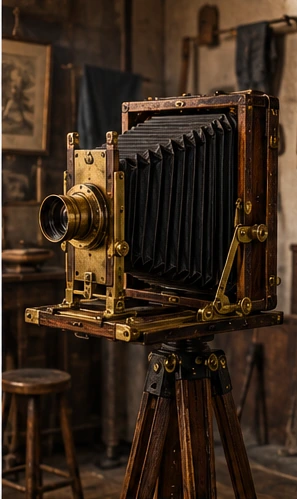
 1878
1878Origins
The galloping horse sequence
Eadweard Muybridge
12 synchronized photographic cameras
A series of exposures was used to examine whether a galloping horse lifted all four hooves off the ground.
VERIFY SOURCE ↗ARCHIVE ENTRY
The inventions, filmmakers and instruments that turned still images into cinema.
9 documented or clearly qualified camera connections. Every entry links to a research source.
Archive method: “On screen” means a camera appears in the story. “Making movies” identifies filming equipment behind the production. “Photographers” identifies artists’ tools. “Origins” and “History” cover inventions and events. Sources are linked on every card. Illustrations are not actual screen-used props.
9 researched references shown
1878Eadweard Muybridge
12 synchronized photographic cameras
A series of exposures was used to examine whether a galloping horse lifted all four hooves off the ground.
1882Étienne-Jules Marey
Chronophotographic gun
A device shaped like a gun captured successive phases of movement and helped pioneer motion analysis.
1882Étienne-Jules Marey
Chronophotographic plate camera
A rotating shutter recorded multiple stages of an action onto the same photographic plate.
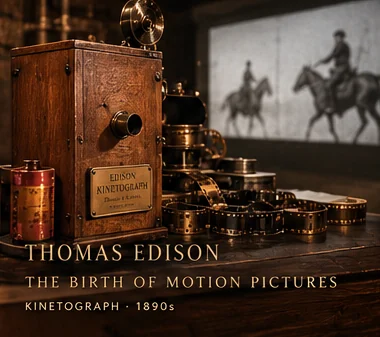 1891
1891Edison laboratory / W. K. L. Dickson
Kinetograph
Dickson and his colleagues developed motion-picture camera technology in Edison’s laboratory.
1893Edison laboratory
Kinetograph
The rotating early motion-picture studio used natural daylight and Kinetograph cameras.
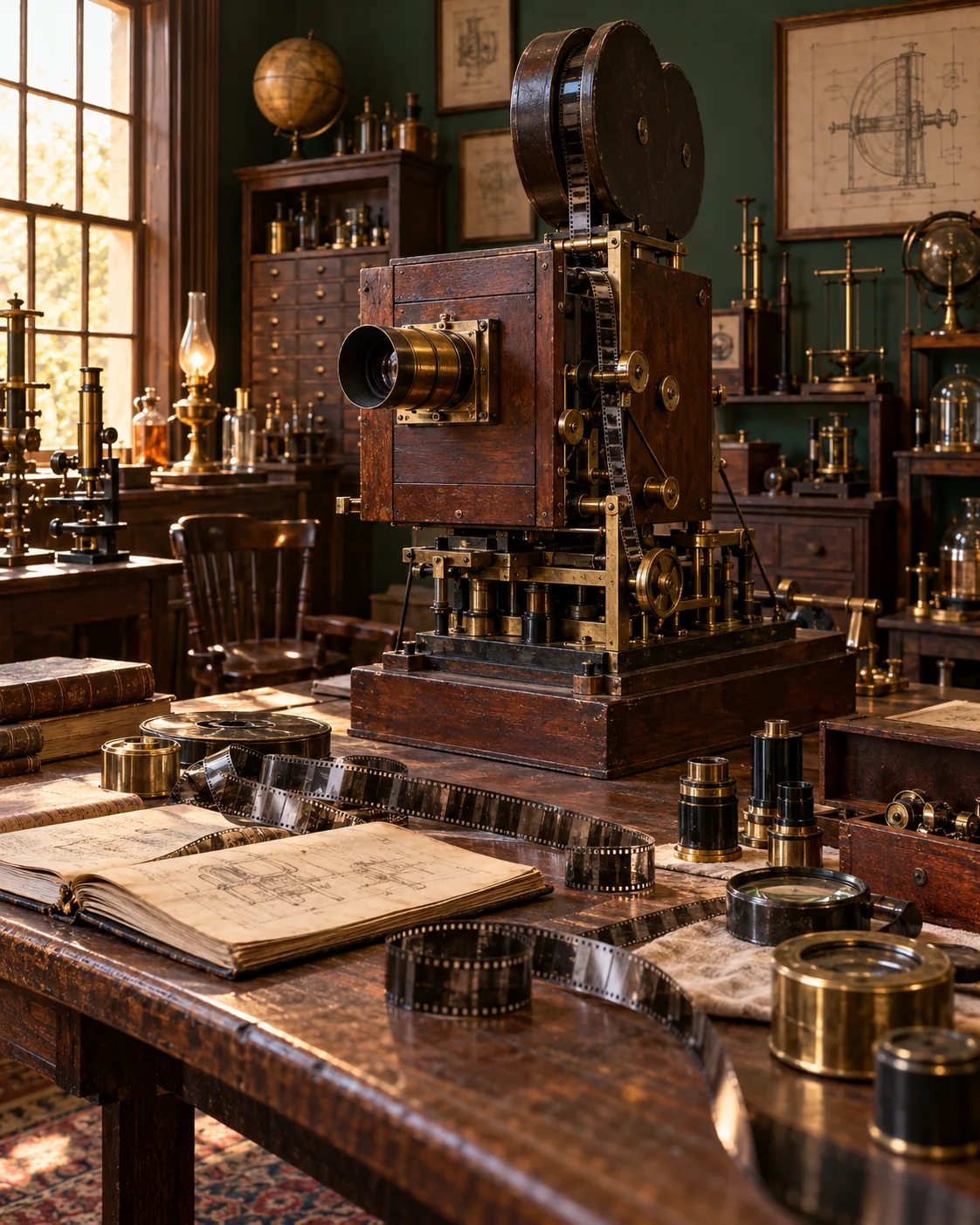 1895
1895Lumière brothers
Cinématographe Lumière
A famous early motion picture made with a compact camera that could also print and project film.
1895Lumière brothers
Cinématographe Lumière
Unlike a peep-show viewer, the Cinématographe brought moving images before an audience.
1896Alice Guy-Blaché
Likely Demenÿ–Gaumont 60mm chronophotograph
Her memoirs do not identify the exact camera; historical research suggests the 60mm Gaumont apparatus.
Probable model — treat precise model as provisional.
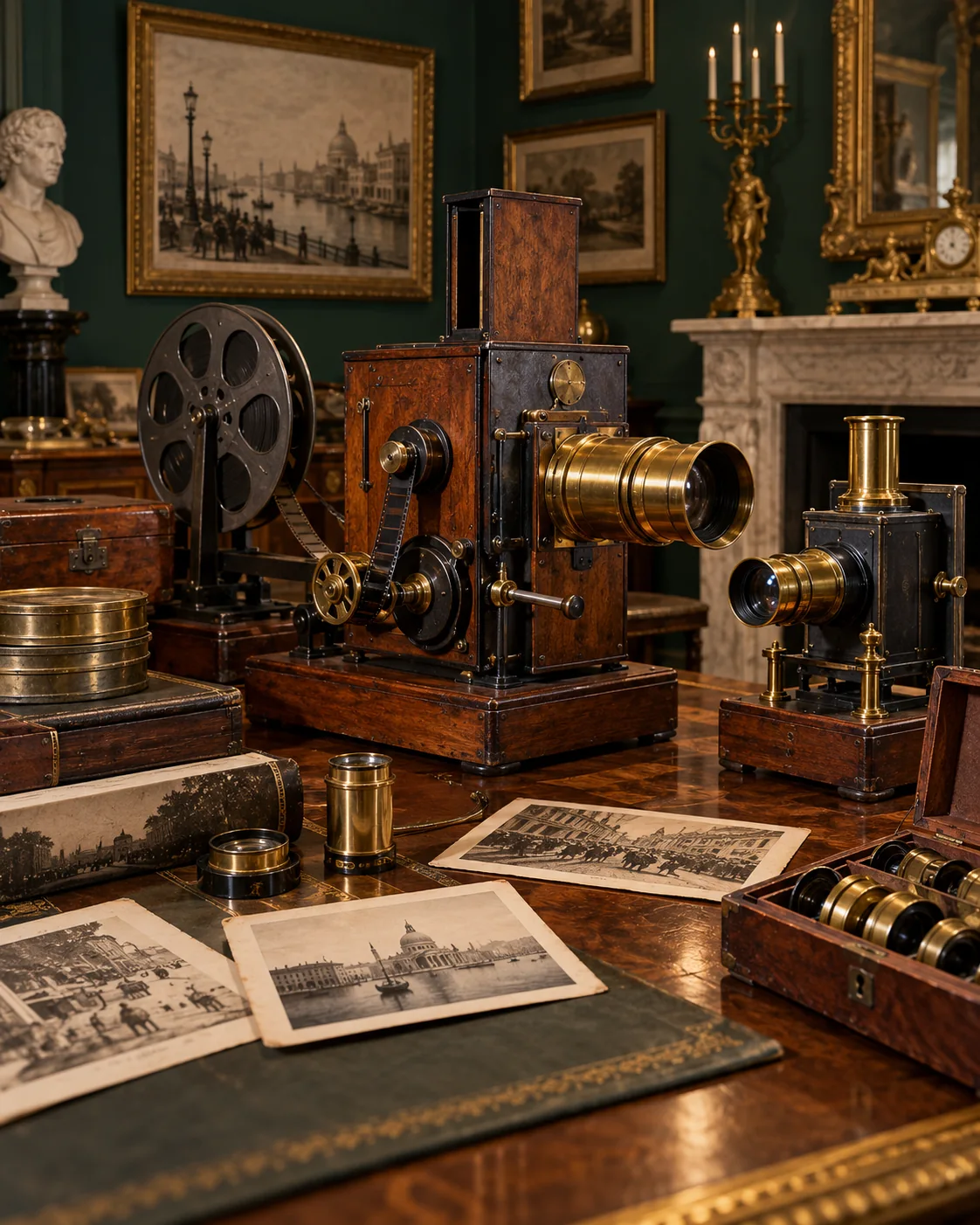 1896
1896Georges Méliès
Robert W. Paul projector converted to 35mm camera
The Cinémathèque française identifies a surviving apparatus of the kind converted for Méliès’s early films.