 1878
1878Origins
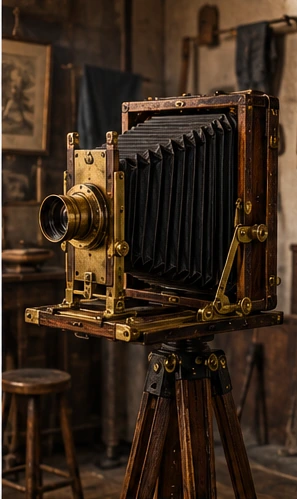
The galloping horse sequence
Eadweard Muybridge
12 synchronized photographic cameras
A series of exposures was used to examine whether a galloping horse lifted all four hooves off the ground.
VERIFY SOURCE ↗ARCHIVE ENTRY
On-screen camera props, the equipment behind landmark films, photographers’ tools and the machines that invented moving pictures.
88 documented or clearly qualified camera connections. Every entry links to a research source.
Read the researched story and follow its original source.
Read feature ↗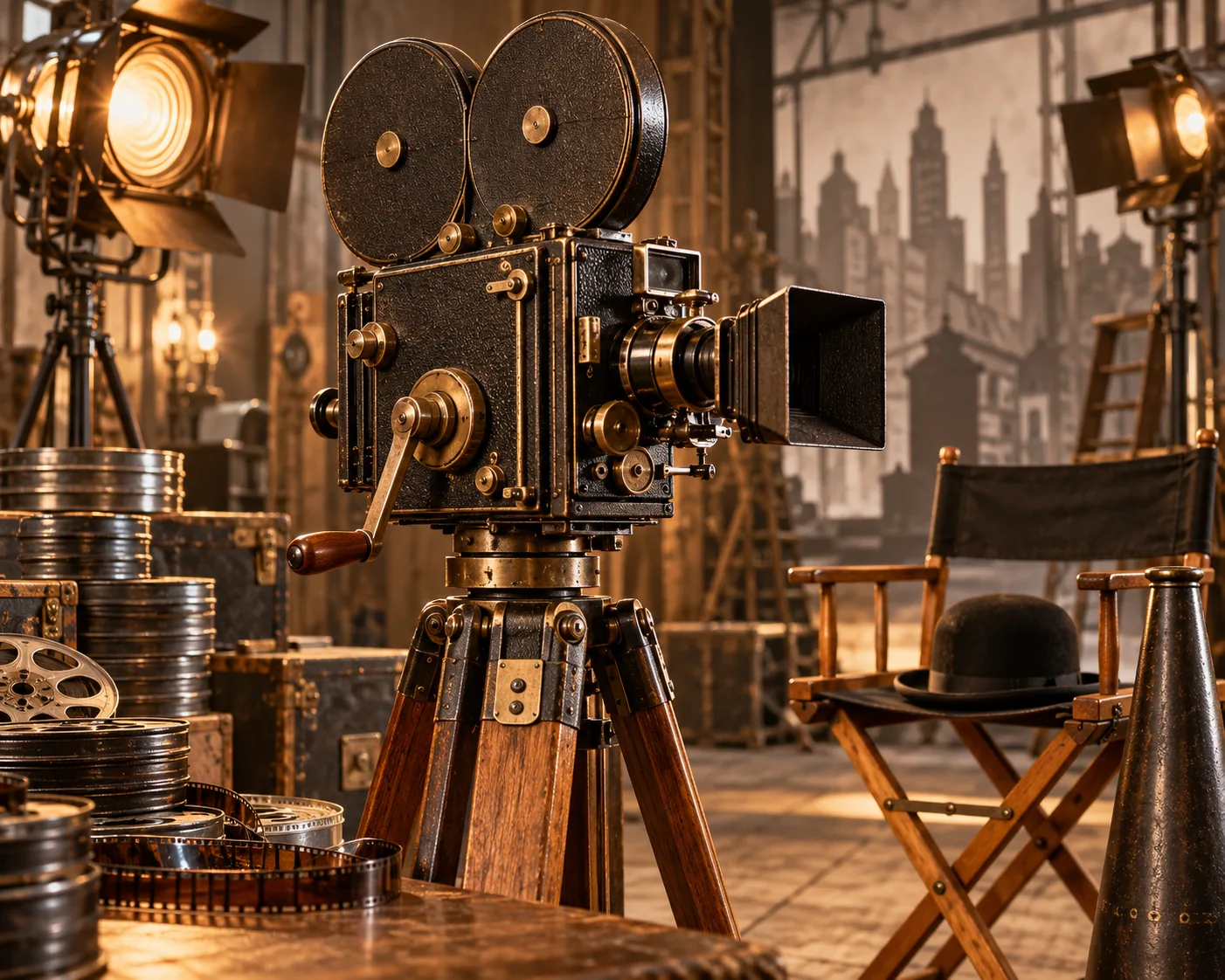
Read the researched story and follow its original source.
Read feature ↗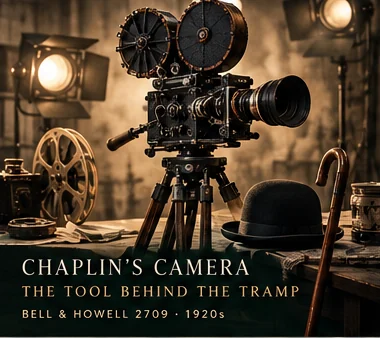
Read the researched story and follow its original source.
Read feature ↗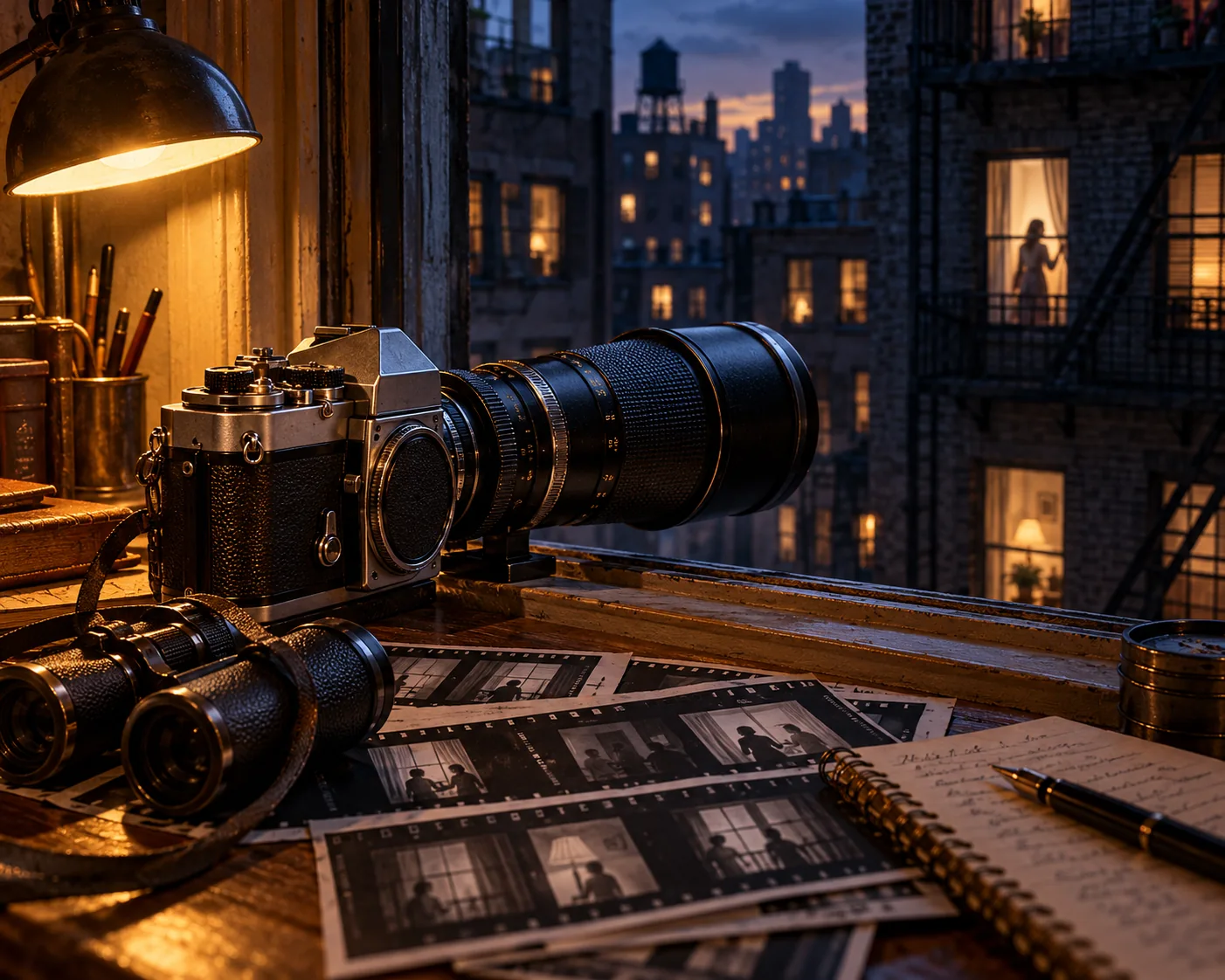
Read the researched story and follow its original source.
Read feature ↗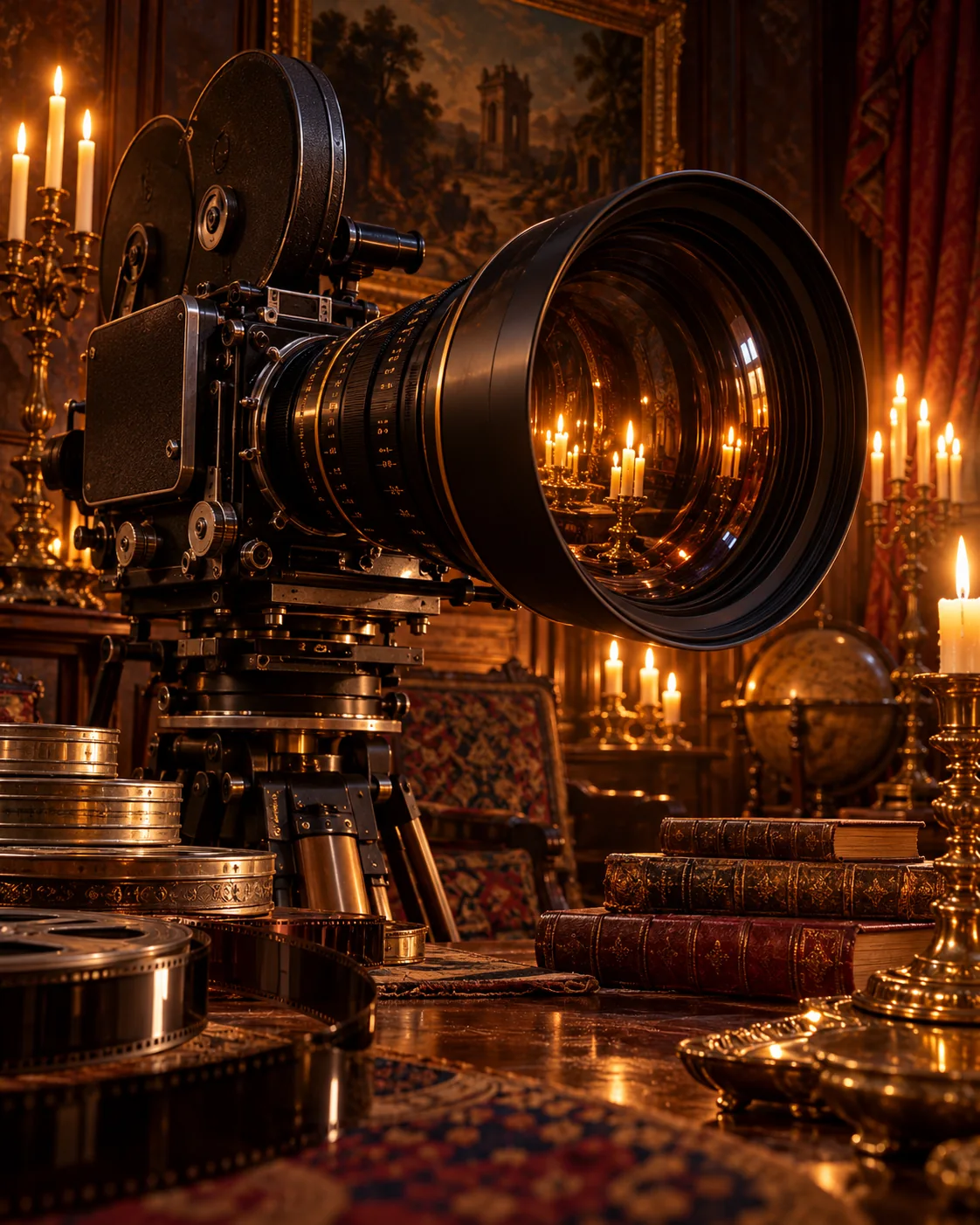
Read the researched story and follow its original source.
Read feature ↗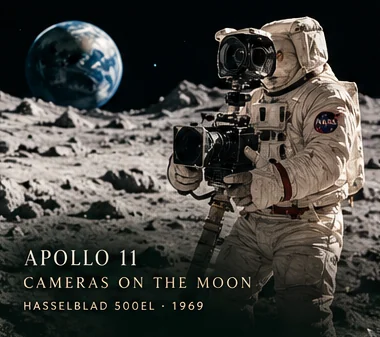
Read the researched story and follow its original source.
Read feature ↗Read about the camera in the story, then open an independent model dossier before shopping. Not every famous filming apparatus is practical to buy, and identical models are not screen-used artifacts.
Archive method: “On screen” means a camera appears in the story. “Making movies” identifies filming equipment behind the production. “Photographers” identifies artists’ tools. “Origins” and “History” cover inventions and events. Sources are linked on every card. Illustrations are not actual screen-used props.
Illustrations on these pages are AI-generated thematic reconstructions for editorial atmosphere, not documentary images of historic equipment. Follow linked research sources for verified object identification.
88 researched references shown
1878Eadweard Muybridge
12 synchronized photographic cameras
A series of exposures was used to examine whether a galloping horse lifted all four hooves off the ground.
1882Étienne-Jules Marey
Chronophotographic gun
A device shaped like a gun captured successive phases of movement and helped pioneer motion analysis.
1882Étienne-Jules Marey
Chronophotographic plate camera
A rotating shutter recorded multiple stages of an action onto the same photographic plate.
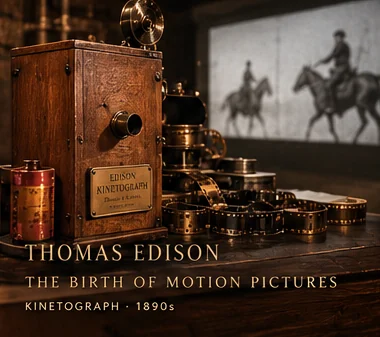
1891Edison laboratory / W. K. L. Dickson
Kinetograph
Dickson and his colleagues developed motion-picture camera technology in Edison’s laboratory.
1893Edison laboratory
Kinetograph
The rotating early motion-picture studio used natural daylight and Kinetograph cameras.
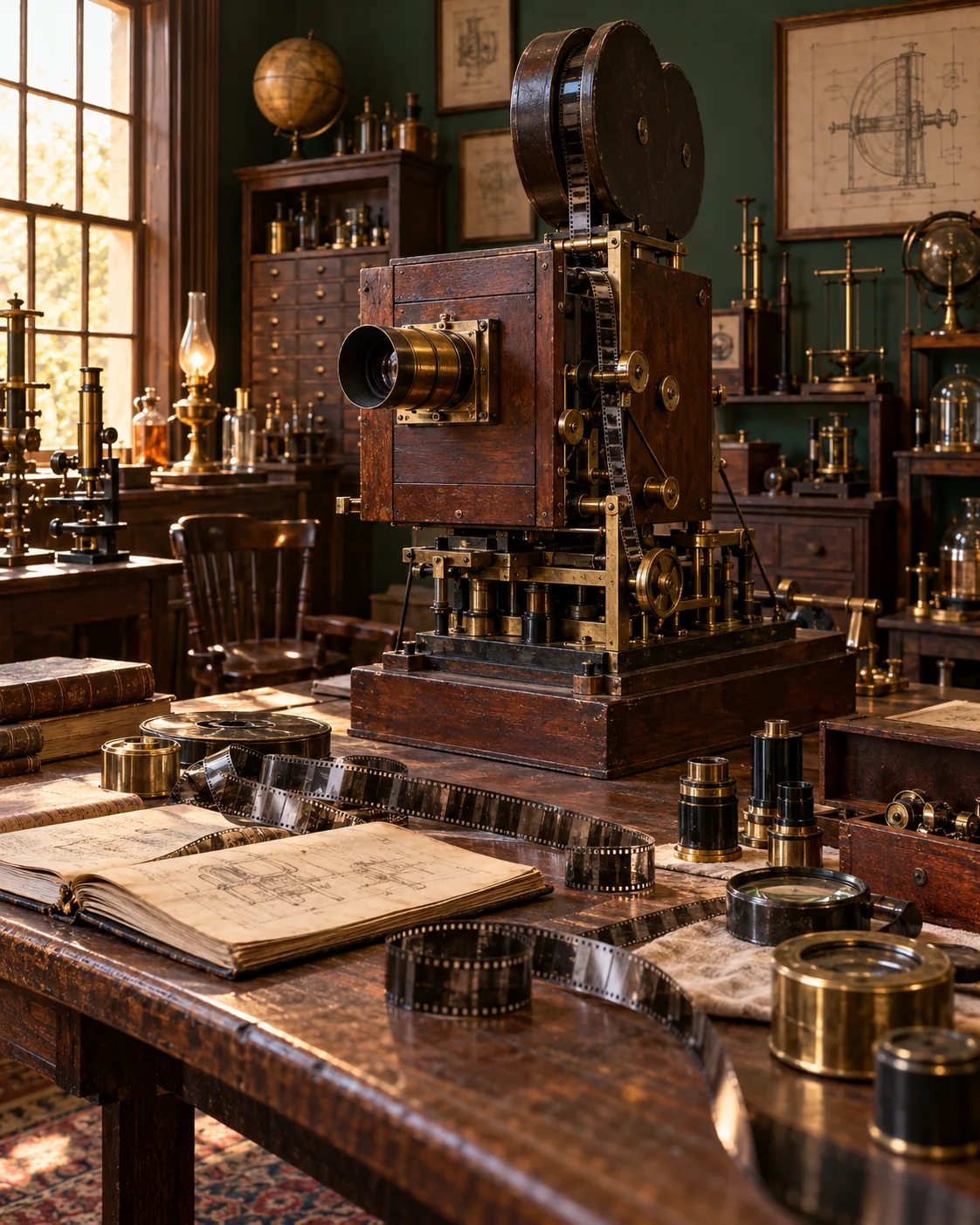 1895
1895Lumière brothers
Cinématographe Lumière
A famous early motion picture made with a compact camera that could also print and project film.
1895Lumière brothers
Cinématographe Lumière
Unlike a peep-show viewer, the Cinématographe brought moving images before an audience.
1896Alice Guy-Blaché
Likely Demenÿ–Gaumont 60mm chronophotograph
Her memoirs do not identify the exact camera; historical research suggests the 60mm Gaumont apparatus.
Probable model — treat precise model as provisional.
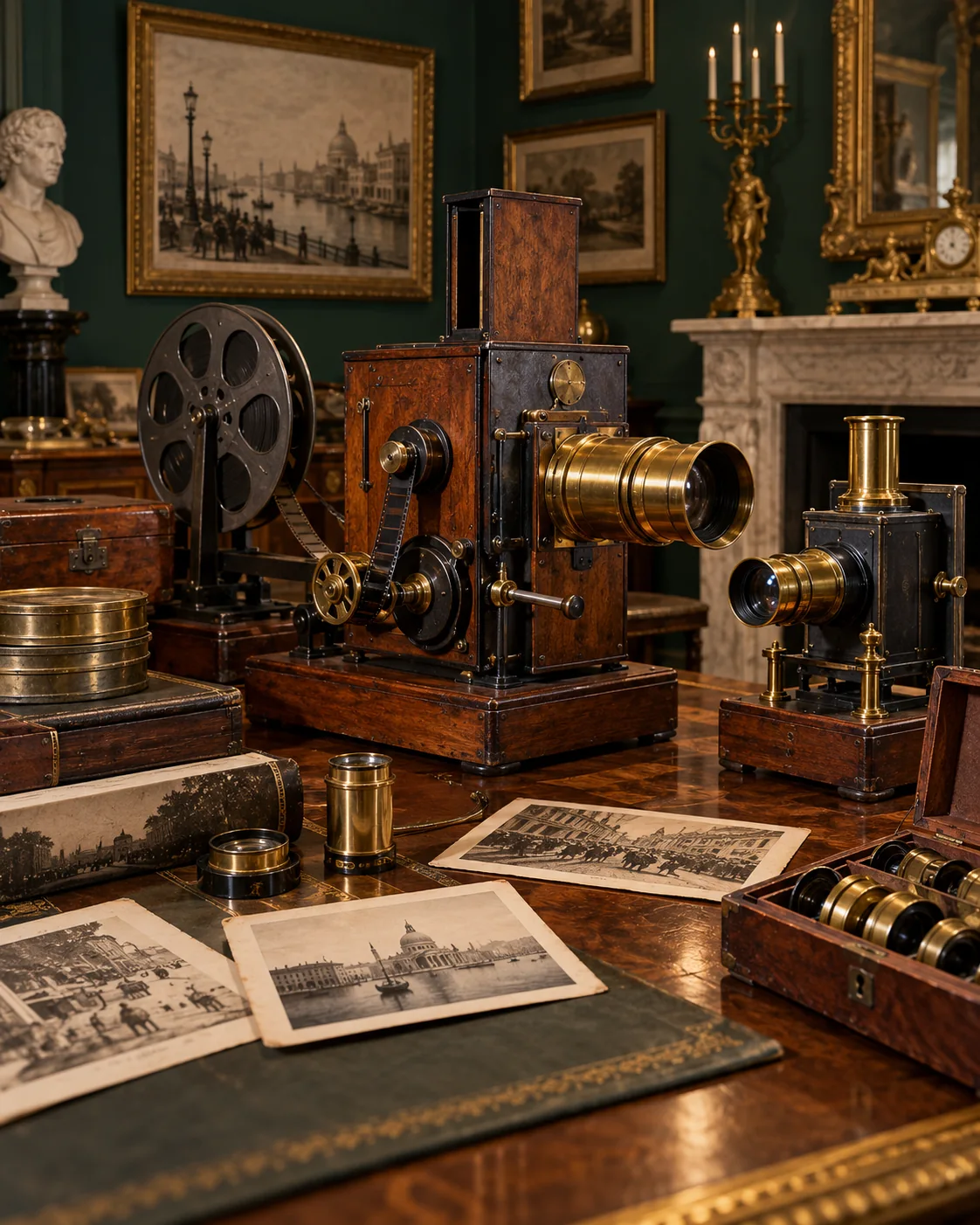 1896
1896Georges Méliès
Robert W. Paul projector converted to 35mm camera
The Cinémathèque française identifies a surviving apparatus of the kind converted for Méliès’s early films.
1925Charlie Chaplin / Rollie Totheroh
Bell & Howell 2709
Totheroh photographed Chaplin using a hand-cranked all-metal Hollywood studio camera.
Silent eraCharlie Chaplin
Bell & Howell 2709
The Bell & Howell 2709 was a professional studio investment that Chaplin personally owned.
1928Buster Keaton
Lucien Prévost 35mm hand-cranked camera
The comedy contrasts Keaton’s dated camera with newer press technology.
1928Buster Keaton
Akeley newsreel camera
The opposing newsreel cameraman uses a technologically advanced Akeley machine.
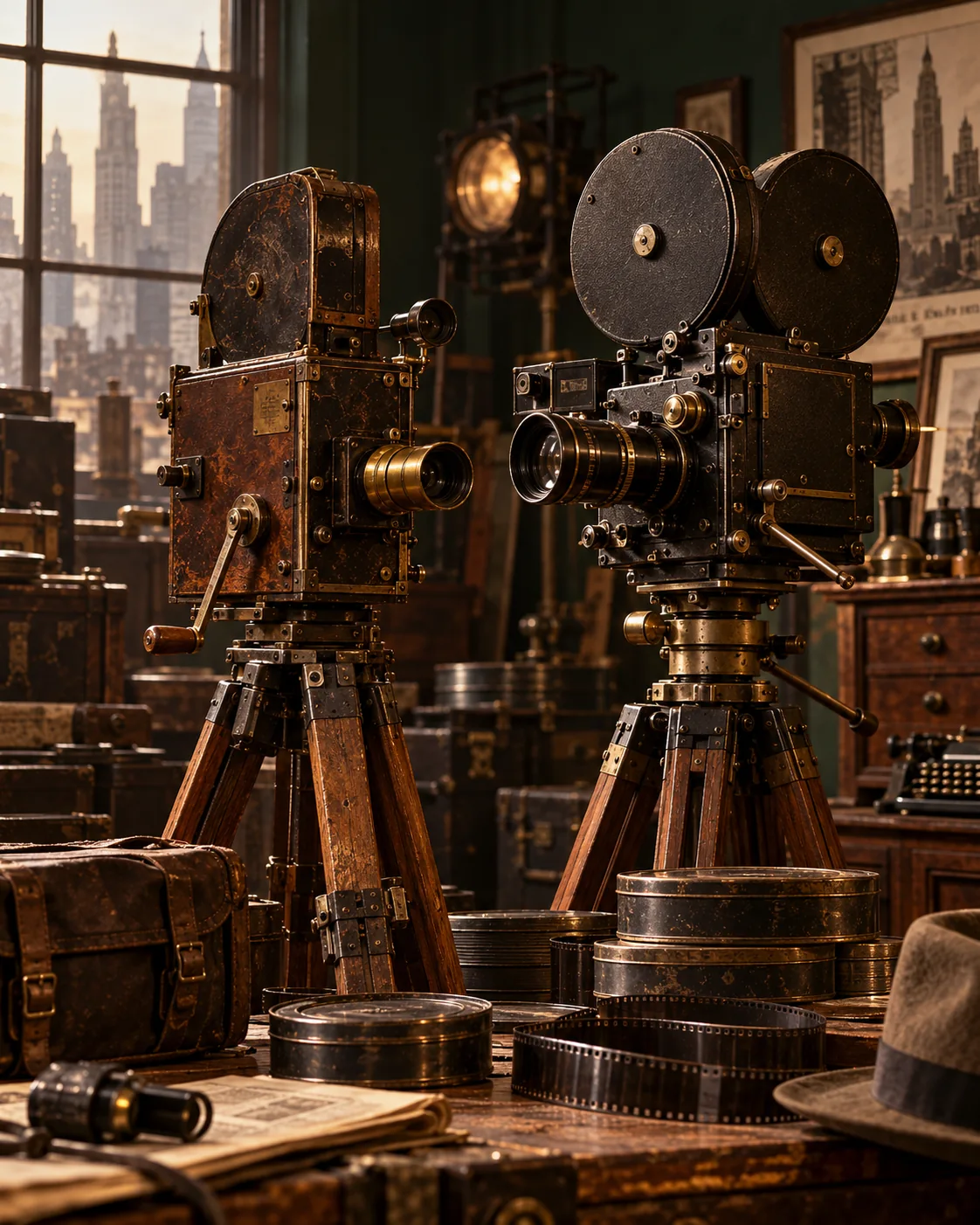 1929
1929Dziga Vertov / Mikhail Kaufman
Motion-picture camera; exact model not asserted
The act of filming becomes a character in this experimental silent documentary.
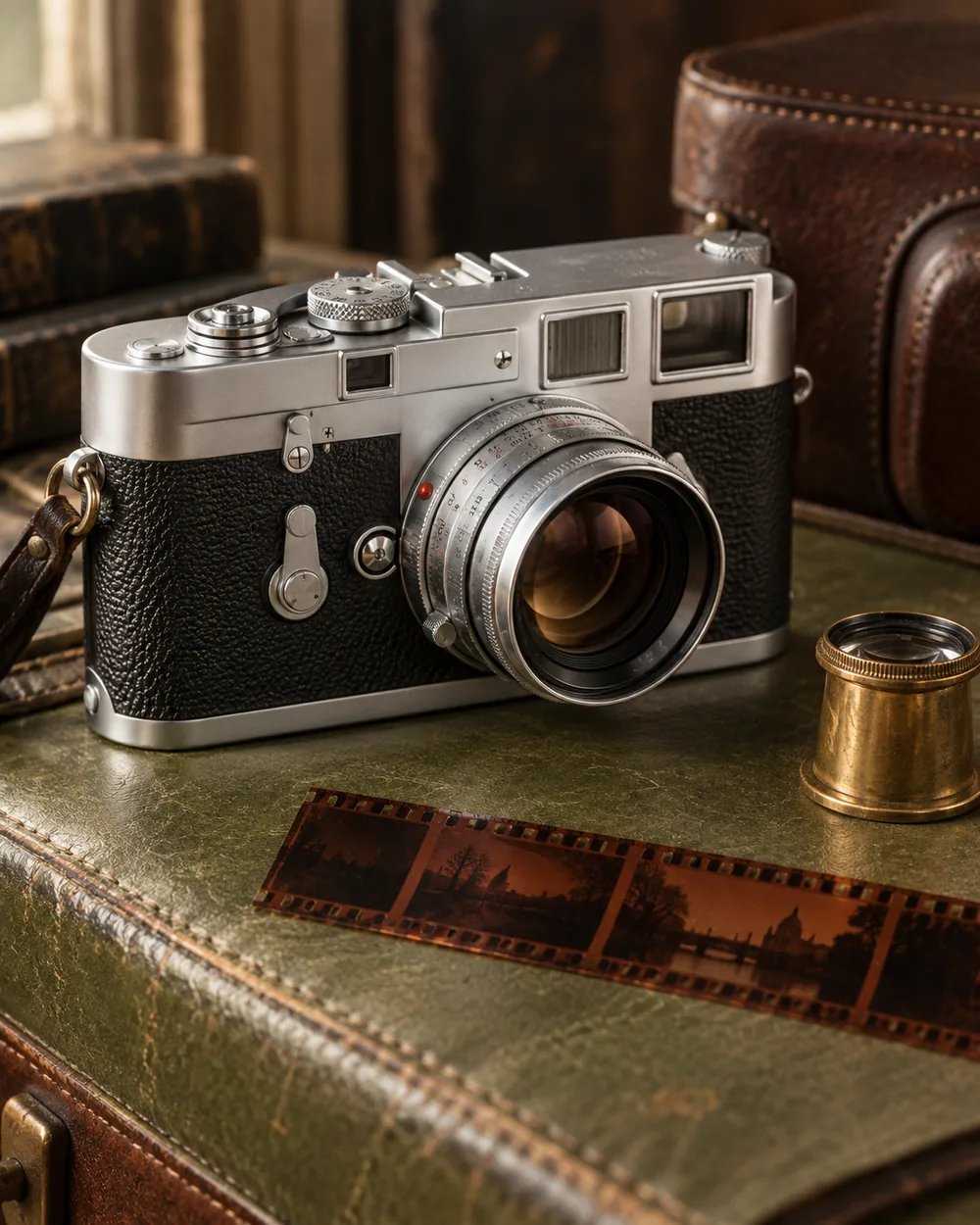 1932
1932Henri Cartier-Bresson
Early Leica 35mm camera
His first Leica became a defining companion in early European street photography.
1939Victor Fleming / Harold Rosson
Three-strip Technicolor motion-picture camera
The camera separated incoming light onto three negatives to create Oz’s vibrant color.
 1939
1939The Wizard of Oz crew
Multiple cinema cameras (models not established)
A Library of Congress exhibition documents as many as nine cameras concealed around the sets.
1941Orson Welles / Gregg Toland
Self-blimped studio cinema camera (model not asserted)
The camera and faster film supported dramatic low angles, movement and deep-focus compositions.
 1947
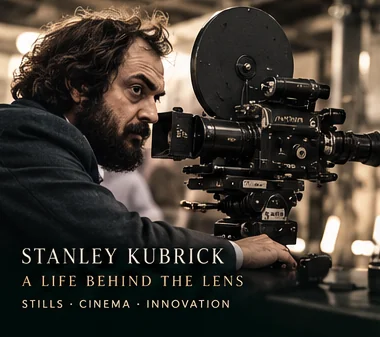
1947Stanley Kubrick
Rolleiflex twin-lens reflex
A period interview says Kubrick used a standard Rolleiflex before joining LOOK.
1948Stanley Kubrick
4×5 Speed Graphic
The young photographer lists a Speed Graphic among his working tools.
1948Stanley Kubrick
Contax rangefinder
The same contemporary interview records a Contax in Kubrick’s camera kit.
1948Stanley Kubrick
Automatic Rolleiflex
Kubrick moved to an automatic Rolleiflex during his professional photography years.
 1952
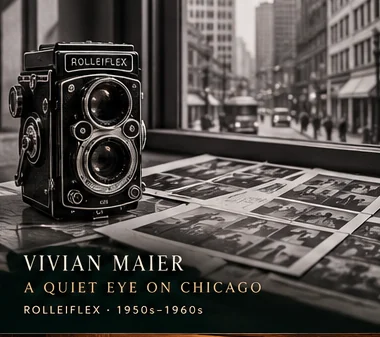
1952Vivian Maier
Rolleiflex twin-lens reflex
Maier purchased a Rolleiflex in 1952, leading to her defining waist-level street photography.
Before 1952Vivian Maier
Kodak Brownie box camera
Maier’s archive identifies an inexpensive Kodak Brownie as her first camera.
 1954
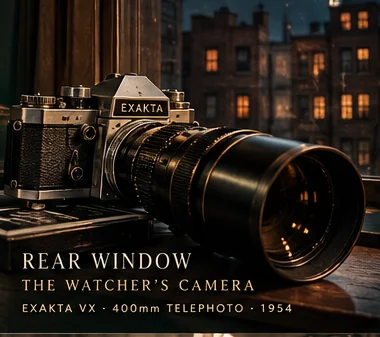
1954Alfred Hitchcock / James Stewart
Ihagee Exakta VX
A working photojournalist turns his still camera into a way of surveying an apartment courtyard.
1954Rear Window
Kilfitt Fern-Kilar 400mm f/5.6
The long telephoto lens gives the character his famous close-up view into neighboring windows.
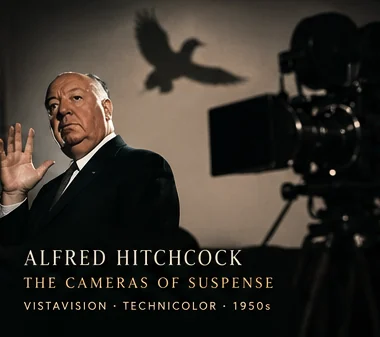 1958
1958Alfred Hitchcock
Mitchell VistaVision No. 30
A museum-held camera is documented as having worked on parts of the film.
1959Alfred Hitchcock
Mitchell VistaVision No. 30
The same identifiable VistaVision camera is linked by research to filming parts of this Hitchcock classic.
1959William Wyler
Mitchell 65mm camera and Panavision optics
Epic-scale anamorphic photography powered the film’s unusually wide images.
1962David Lean / Freddie Young
Super Panavision 70 camera system
The epic was photographed in the spherical 65mm Super Panavision 70 format.
1968Stanley Kubrick
Super Panavision 70 camera system
Large-format cinematography became a crucial part of the film’s futuristic visual identity.
1971Stanley Kubrick
Mitchell BNC motion-picture camera
Kubrick acquired a BNC cinema camera for long takes and the flexibility of special lens work.
1975Stanley Kubrick / John Alcott
Modified Mitchell BNC + Zeiss Planar 50mm f/0.7
Zeiss lenses adapted to a modified BNC made extremely low-light candle scenes possible.
1975Stanley Kubrick
Zeiss 50mm f/0.7 + Kollmorgen adapter (36.5mm equivalent)
A bespoke front adapter gave a wider view while retaining the unusual maximum aperture.
1975Steven Spielberg / Bill Butler
Panavision Panaflex with C Series lenses
The portable camera system helped put audiences next to the water and the shark.
1977George Lucas / Gil Taylor
Panavision PSR R-200 with C Series optics
Panavision documents the exact camera-and-lens combination used for the original film.
1978Richard Donner
Panavision PSR R-200
The camera helped photograph a blockbuster whose signature promise was that its hero could fly.
1980Stanley Kubrick / Garrett Brown
Arriflex 35BL on Steadicam
Low-level tracking shots follow the characters through the Overlook Hotel.
1980Stanley Kubrick
Arriflex 2C
A lighter film camera was selected for the difficult running shots through the maze.
1980Irvin Kershner / ILM
Custom reflex VistaVision motion-picture camera
ILM engineered a specialized reflex VistaVision camera for effects photography.
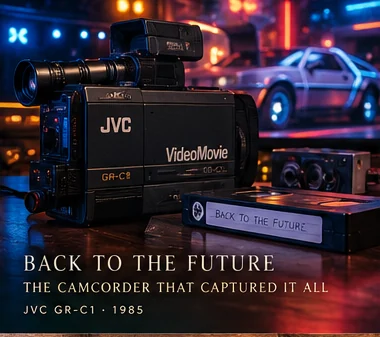 1985
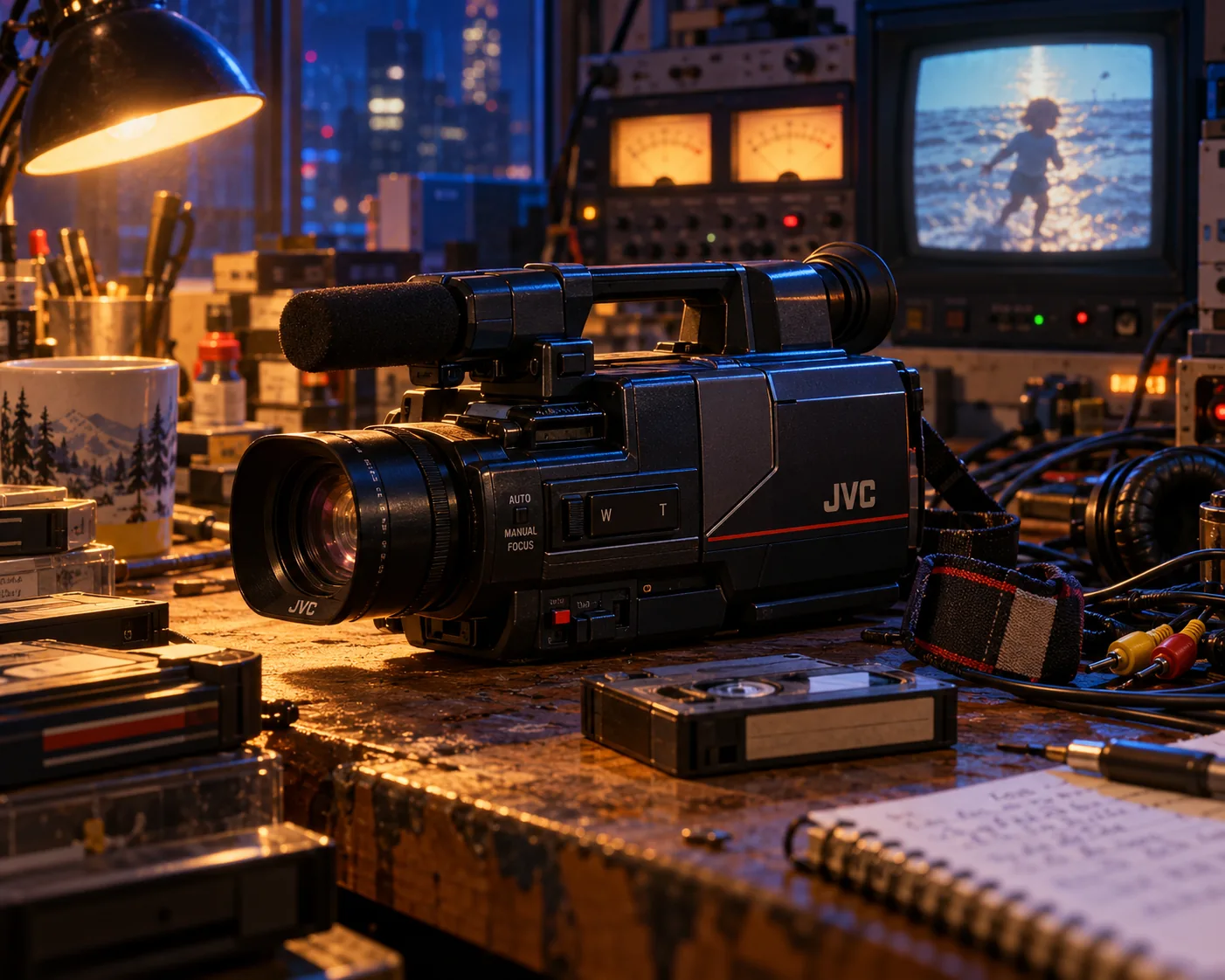
1985Robert Zemeckis
JVC GR-C1 VHS-C
Marty’s handheld camera records the time-machine experiment at Twin Pines Mall.
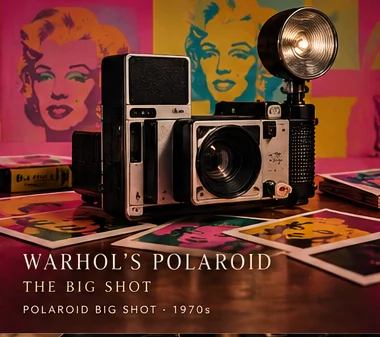 1987
1987Andy Warhol
Polaroid Big Shot Land Camera
Instant-camera portraits became reference images for his commissioned silkscreens.
1969Apollo 11 / NASA
Modified Hasselblad 500EL Data Camera
NASA describes the modified Hasselblad taken onto the lunar surface.
1969Apollo 11 / NASA
Hasselblad 500EL
NASA documents a Hasselblad kept aboard Columbia during the moon landing.
1969Apollo 11 / NASA
16mm Maurer film camera
Two compact motion-picture cameras formed part of the Apollo 11 imaging kit.
1969Apollo 11 / NASA
Kodak close-up stereo camera
An unusual close-up stereo camera was used to document the lunar surface.
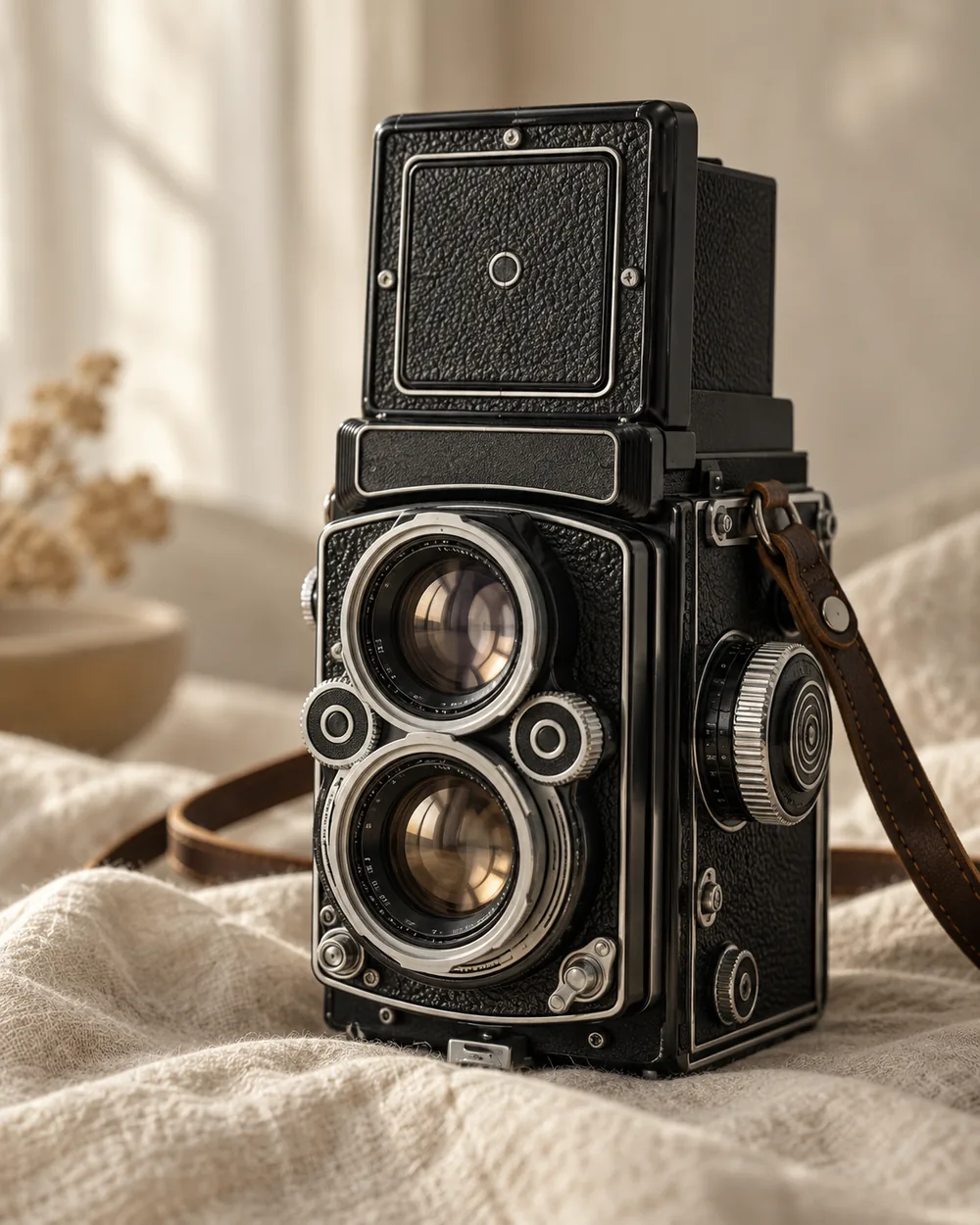 1962
1962Diane Arbus
Rolleiflex twin-lens reflex
Arbus moved from 35mm to medium-format twin-lens photography in 1962.
After 1962Diane Arbus
Mamiyaflex twin-lens reflex
The National Gallery of Australia describes her later use of Mamiyaflex cameras.
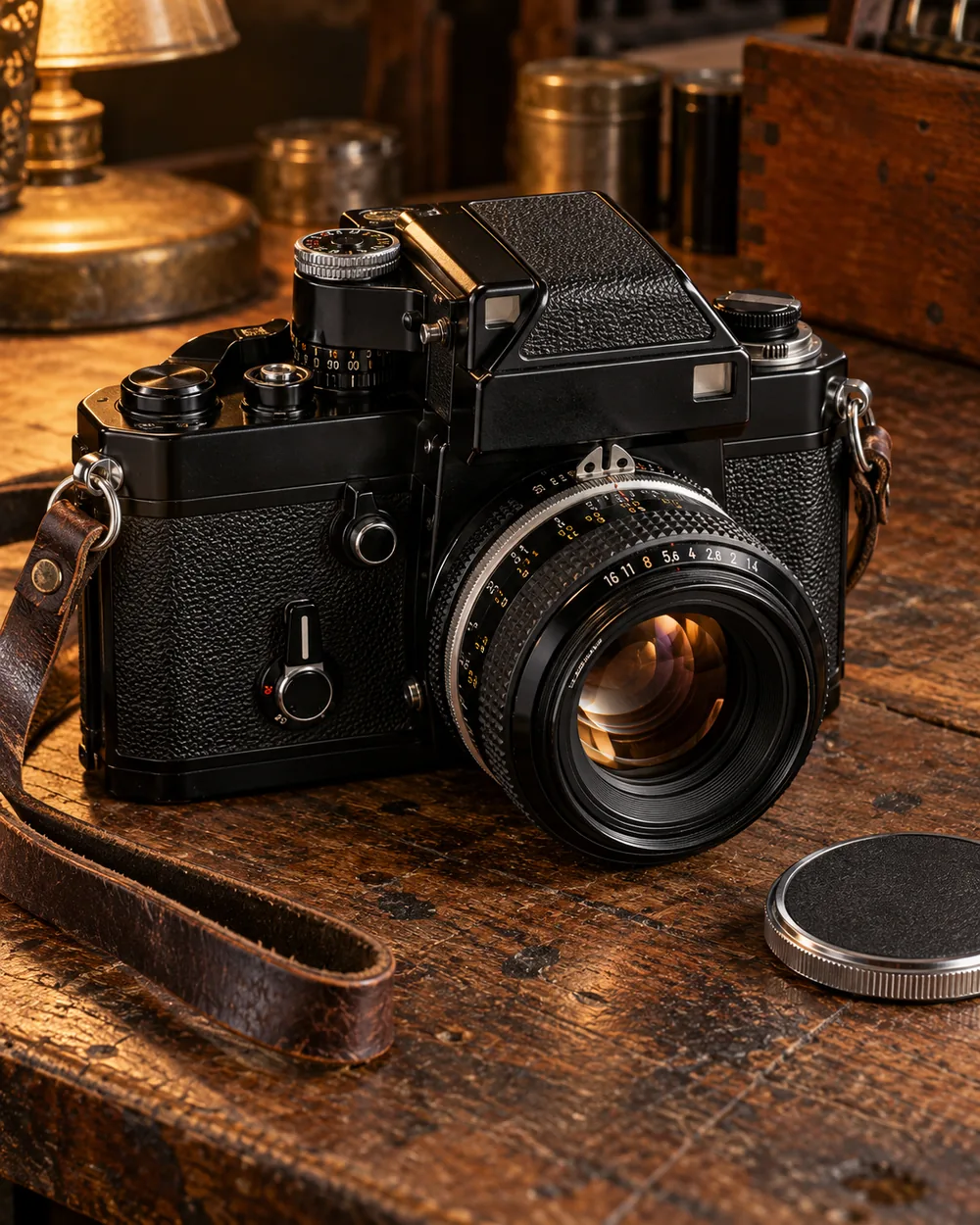 Before 1962
Diane Arbus
35mm Nikon camera
Before 1962 she primarily worked with a Nikon 35mm camera.
CareerAnsel Adams
8×10 large-format view camera
His published working-equipment list includes a full 8×10 view-camera system.
CareerAnsel Adams
7×17 panoramic camera
Adams carried a special-purpose panoramic view camera alongside his main gear.
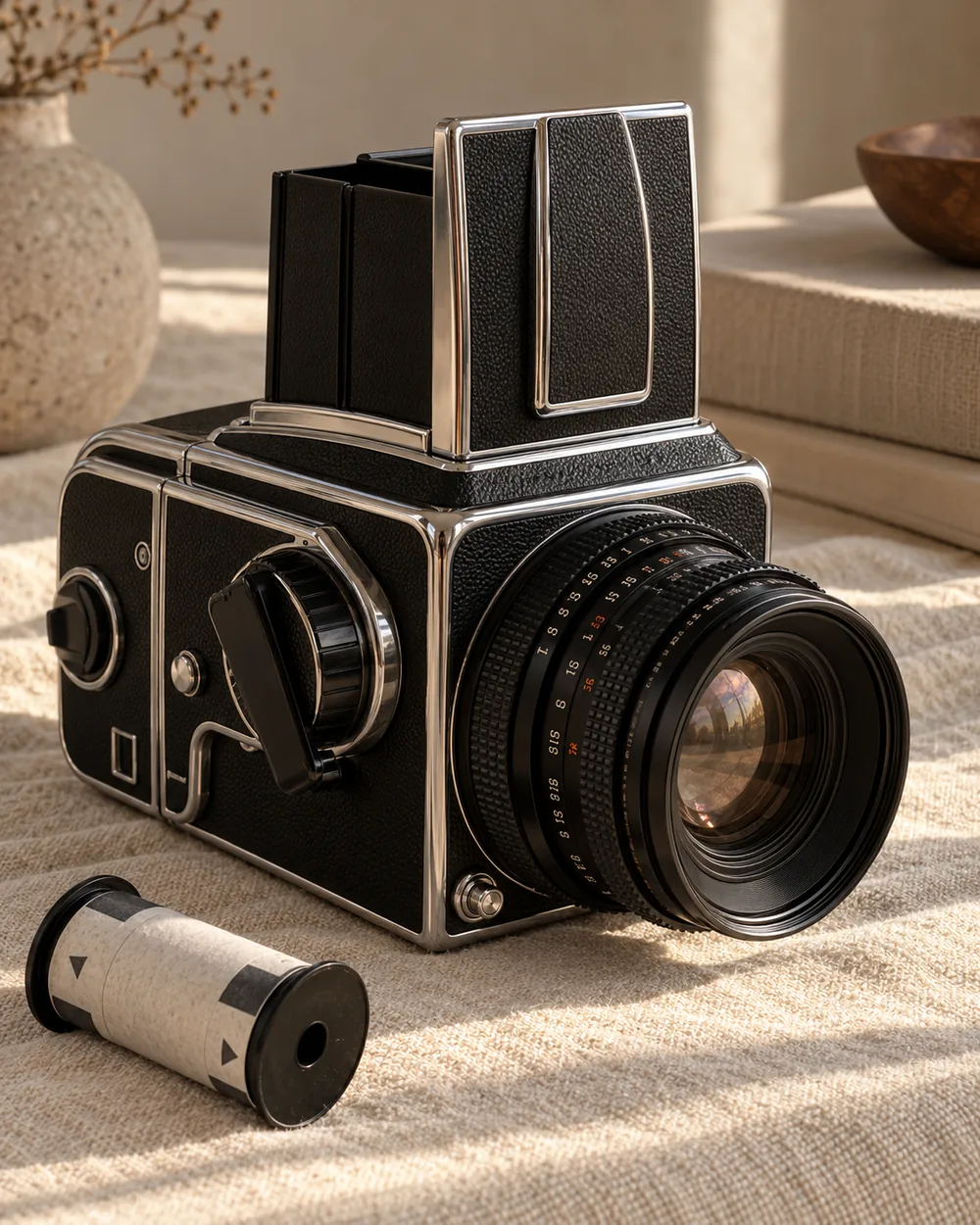 Career
Ansel Adams
Hasselblad system
His equipment inventory includes a Hasselblad system and five lens focal lengths.
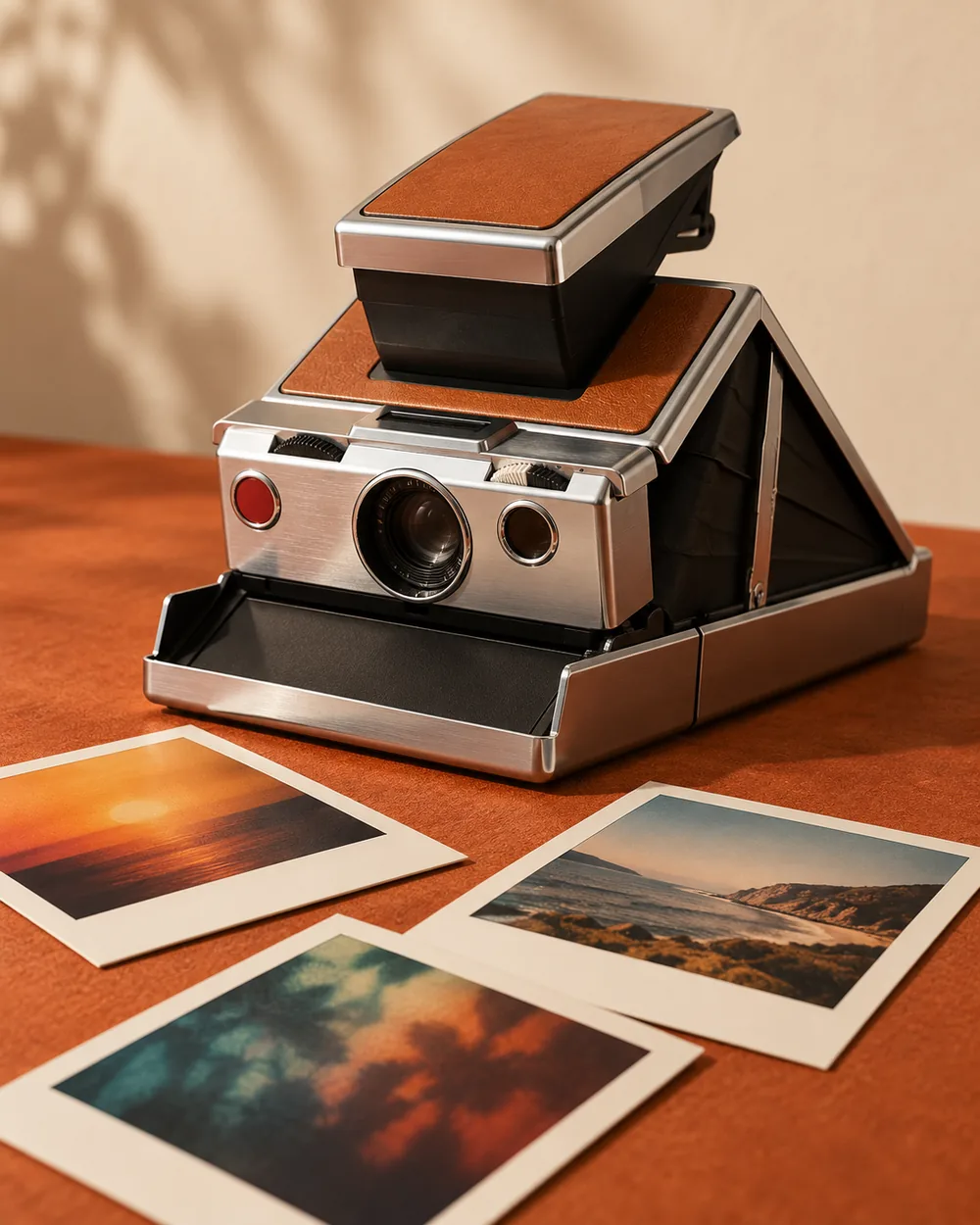 Career
Ansel Adams
Polaroid cameras
The photographer counted two Polaroid cameras among his varied equipment.
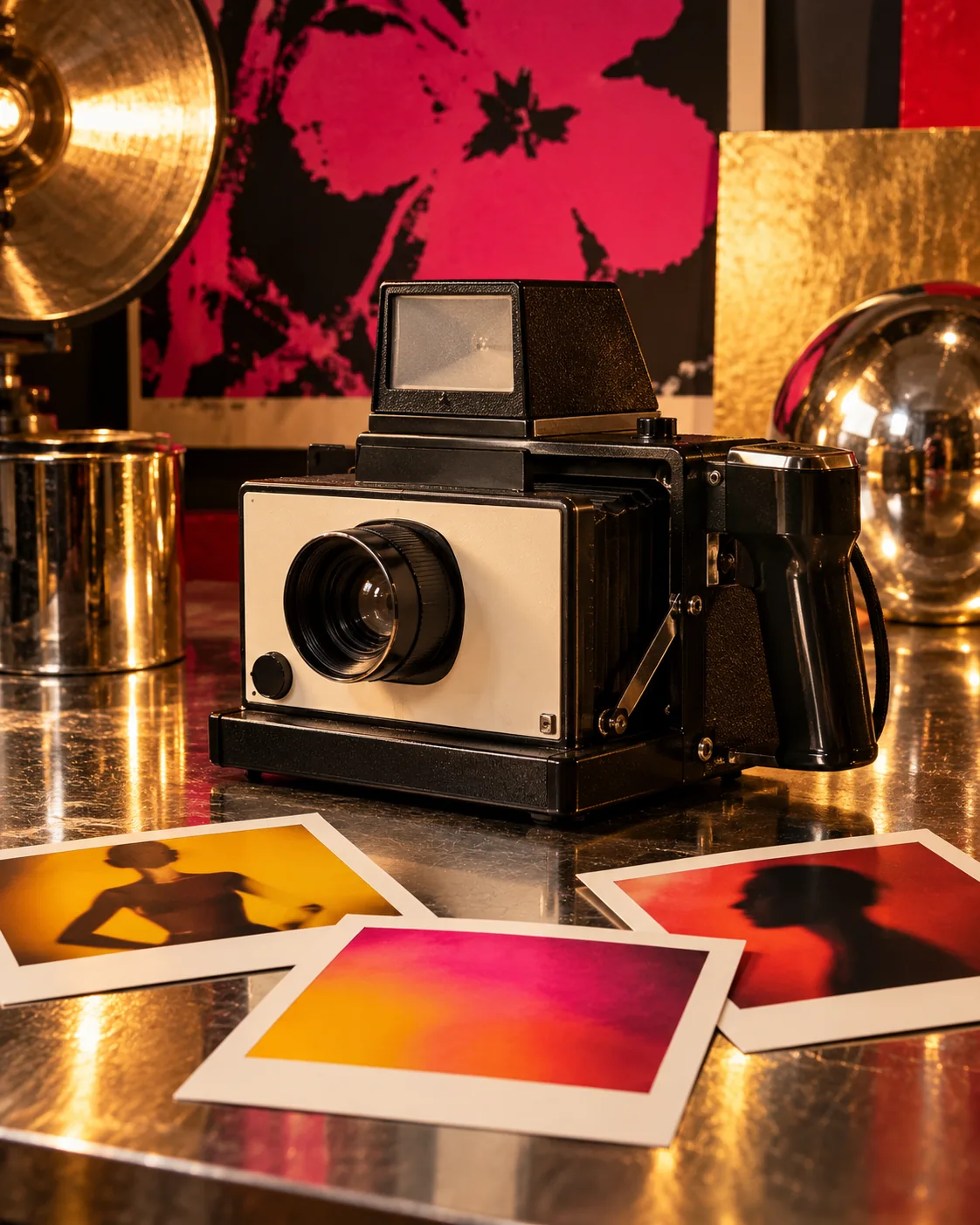 1973
1973Walker Evans
Polaroid SX-70
At age seventy, Evans embraced the instant camera’s portability and directness.
1971Andy Warhol
Polaroid Big Shot
Warhol adopted the instant portrait camera shortly after its 1971 introduction.
1970sAndy Warhol
Unspecified compact 35mm camera
Warhol also regularly used a small 35mm camera away from his posed Polaroid portraits.
Later careerVivian Maier
Leica IIIc
The Maier archive identifies a Leica IIIc in her later equipment.
Later careerVivian Maier
Zeiss Contarex
Maier also experimented beyond the Rolleiflex with the Contarex system.
Later careerVivian Maier
Ihagee Exakta SLR
Her documented equipment includes a German Exakta camera.
1999Stanley Kubrick / Larry Smith
Arriflex 535B
A pair of 535Bs recorded much of Kubrick’s final film.
1999Stanley Kubrick
Moviecam SL
The lighter Moviecam SL was used with Steadicam to navigate the film’s interiors.
1999Larry and Andy Wachowski / Bill Pope
Panavision Platinum
Bill Pope photographed the film using Panavision Platinum cameras and Primo primes.
1999Daniel Myrick / Eduardo Sánchez
Cinema Products CP-16
A 16mm CP-16 camera was carried by the fictional filmmakers.
1999The Blair Witch Project
Hi8 camcorder; exact model not verified
The video half of the found footage came from a consumer Hi8 camcorder; model naming remains under review.
2002Danny Boyle / Anthony Dod Mantle
Canon XL1 MiniDV
Small standard-definition cameras made it practical to capture unusually empty city streets rapidly.
2014Wes Anderson / Robert Yeoman
Arricam Studio 35mm
Yeoman shot on film using Arricam technology for Anderson’s meticulously composed feature.
2015Quentin Tarantino / Robert Richardson
Panaflex System 65 Studio
The western revived Ultra Panavision 70 on 65mm negative with specially restored optics.
2015Quentin Tarantino
Panaflex System 65 High Speed
A second 65mm camera type supported the large-format production.
2015Sean Baker / Radium Cheung
iPhone 5s and anamorphic adapter
An Academy Museum collection object preserves a camera rig used to film the independent hit.
2017Christopher Nolan / Hoyte van Hoytema
15-perf 65mm IMAX cinema camera
About seventy percent of the film was photographed on the large IMAX format.
2017Christopher Nolan
5-perf 65mm Panavision cameras
The remaining footage was captured on 65mm Panavision equipment.
2023Wes Anderson / Robert Yeoman
Arricam ST and Master Anamorphic lenses
Anamorphic lenses produced clean wide compositions for the film’s desert setting.
2023Christopher Nolan / Hoyte van Hoytema
IMAX MKIV and MSM 9802
Kodak documents large-format color and specially manufactured black-and-white film used for the production.
2023Christopher Nolan
Panavision Panaflex System 65 Studio
Nolan’s film paired giant IMAX units with Panavision’s 65mm studio equipment.
2025Ryan Coogler / Autumn Durald Arkapaw
Panavision System 65 Studio
The production revived Ultra Panavision glass for wide images of open landscapes.
2025Ryan Coogler
Panavision System 65 High Speed
The camera package paired 65mm high-speed and studio bodies with Ultra Panatar optics.
1957Raintree County
MGM Camera 65 / Ultra Panavision family
An early widescreen epic on the American Society of Cinematographers’ Ultra Panavision filmography; individual camera serial numbers are not claimed.
1962Mutiny on the Bounty
65mm Ultra Panavision / MGM Camera 65 family
An early widescreen epic on the American Society of Cinematographers’ Ultra Panavision filmography; individual camera serial numbers are not claimed.
1963It’s a Mad, Mad, Mad, Mad World
65mm Ultra Panavision / MGM Camera 65 family
An early widescreen epic on the American Society of Cinematographers’ Ultra Panavision filmography; individual camera serial numbers are not claimed.
1964The Fall of the Roman Empire
65mm Ultra Panavision / MGM Camera 65 family
An early widescreen epic on the American Society of Cinematographers’ Ultra Panavision filmography; individual camera serial numbers are not claimed.
1965The Greatest Story Ever Told
65mm Ultra Panavision / MGM Camera 65 family
An early widescreen epic on the American Society of Cinematographers’ Ultra Panavision filmography; individual camera serial numbers are not claimed.
1965The Hallelujah Trail
65mm Ultra Panavision / MGM Camera 65 family
An early widescreen epic on the American Society of Cinematographers’ Ultra Panavision filmography; individual camera serial numbers are not claimed.
1965Battle of the Bulge
65mm Ultra Panavision / MGM Camera 65 family
An early widescreen epic on the American Society of Cinematographers’ Ultra Panavision filmography; individual camera serial numbers are not claimed.
1966Khartoum
65mm Ultra Panavision / MGM Camera 65 family
An early widescreen epic on the American Society of Cinematographers’ Ultra Panavision filmography; individual camera serial numbers are not claimed.
2013The Secret Life of Walter Mitty
Nikon F3/T (reported prop identification)
Sean Penn’s photojournalist is seen using a Nikon F3/T-type body with a long telephoto.
Reported identification — treat precise model as provisional.
2002Peter Parker / Spider-Man
Canon New F-1 (reported identification)
The early-2000s live-action Peter Parker is repeatedly associated with a Canon New F-1.
Reported identification — treat precise model as provisional.
2012Peter Parker / The Amazing Spider-Man
Yashica Electro 35 GSN (reported identification)
Collectors identify a Yashica Electro 35 GSN in the Andrew Garfield adaptation.
Reported identification — treat precise model as provisional.
2010sStranger Things / Hawkins
JVC GR-C1 (reported identification)
A JVC camcorder model from Back to the Future later appears in a nostalgic television setting.
Reported identification — treat precise model as provisional.
Read the researched story and follow its original source.
Read feature ↗Read the researched story and follow its original source.
Read feature ↗Read the researched story and follow its original source.
Read feature ↗Read the researched story and follow its original source.
Read feature ↗Read the researched story and follow its original source.
Read feature ↗Read the researched story and follow its original source.
Read feature ↗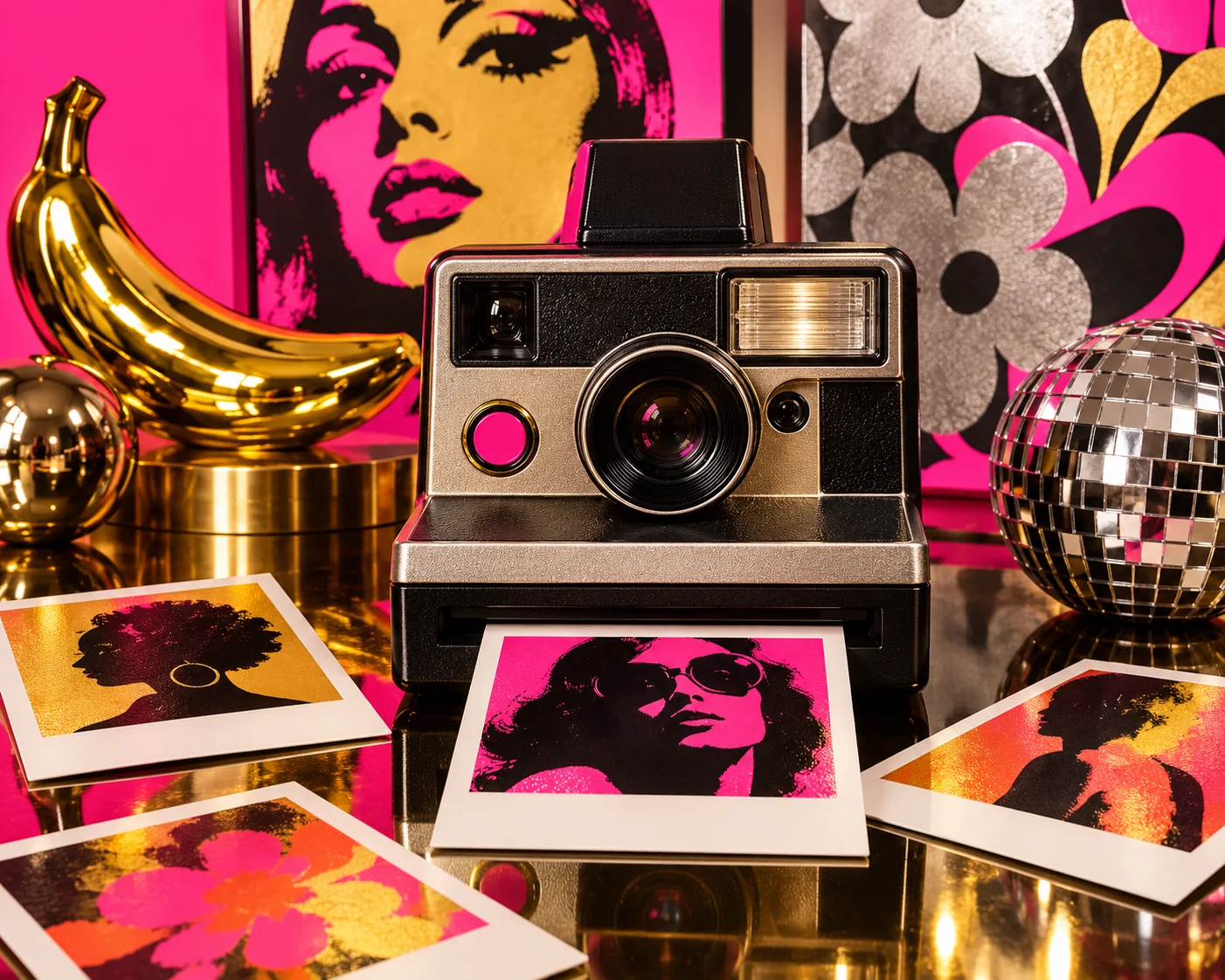
Read the researched story and follow its original source.
Read feature ↗Read the researched story and follow its original source.
Read feature ↗Read the researched story and follow its original source.
Read feature ↗A famous camera can lead to a terrific object, but provenance, function and film availability matter. Start with practical collector tools.
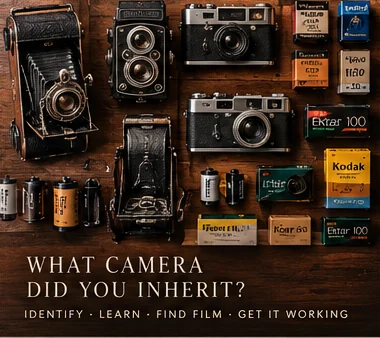
Narrow down a camera family by features, markings and film format.
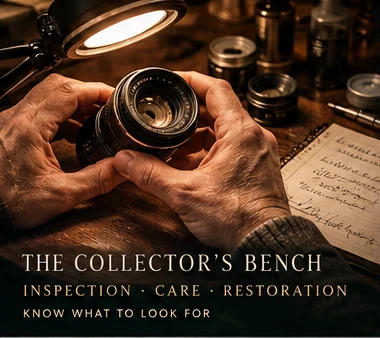
Ask the questions that prevent disappointing purchases.
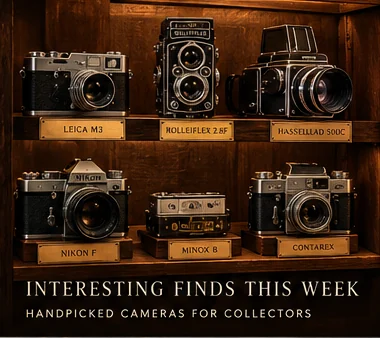
Find comparable listings without invented inventory or prices.