While Edison’s team had developed the Kinetograph, the Lumière brothers presented an unusually compact rival approach. The Cinématographe combined the tasks of recording, making positive film copies and projecting images.
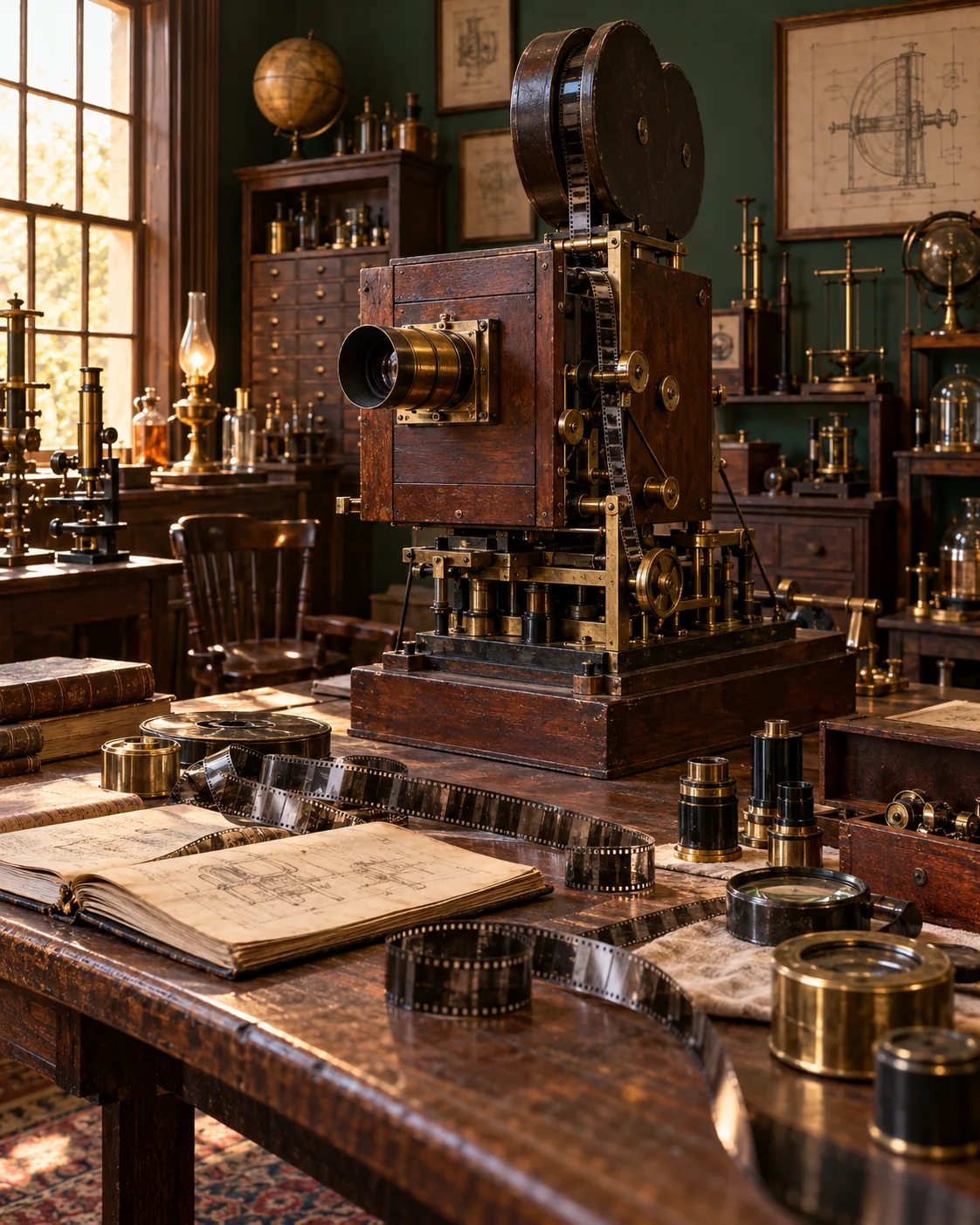
Its ability to show moving pictures to a roomful of people made it foundational to the popular experience of cinema. The Institut Lumière traces demonstrations in 1895 and identifies the device as small enough to travel.
This is precisely the kind of machine CamerasObscuras should celebrate: historical significance, ingenious mechanisms, and a story broader than the object’s current market price.
Connected cameras and equipment
- Cinématographe Lumière — Workers Leaving the Lumière Factory (1895)
- Cinématographe Lumière — A shared cinema audience is born (1895)
Sources and verification
We link to contemporary interviews, museum collections, manufacturer histories and specialist cinematography records when available. Historical camera attribution and an item being screen-used are different claims.